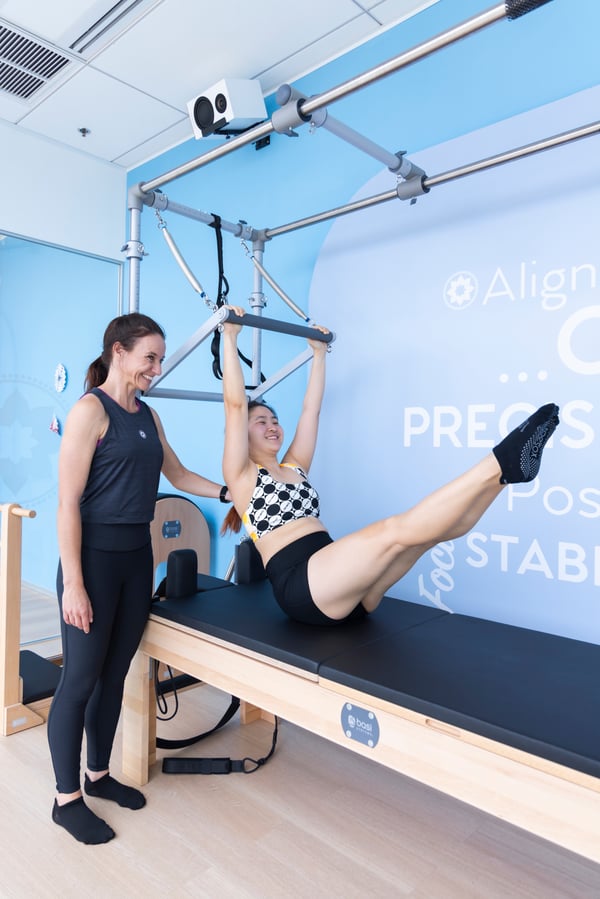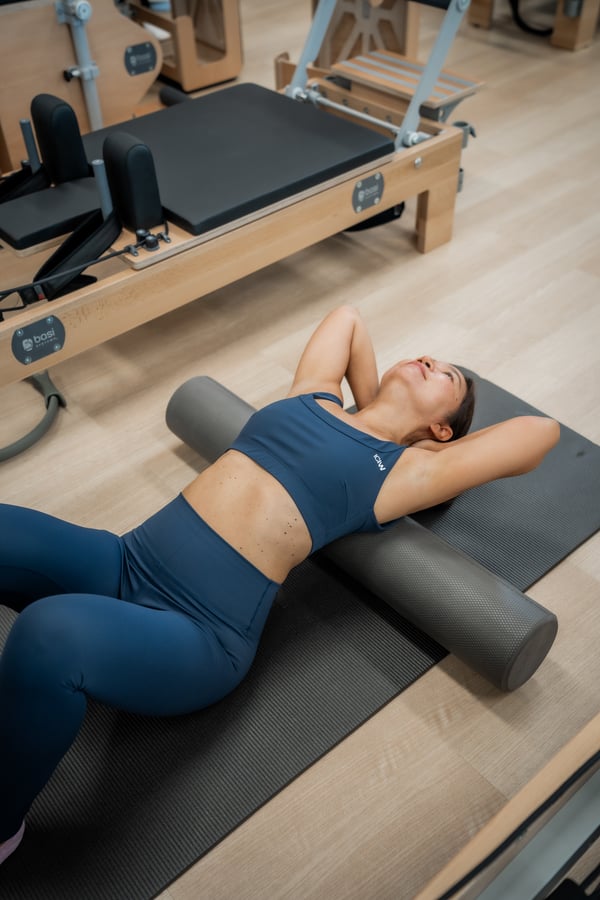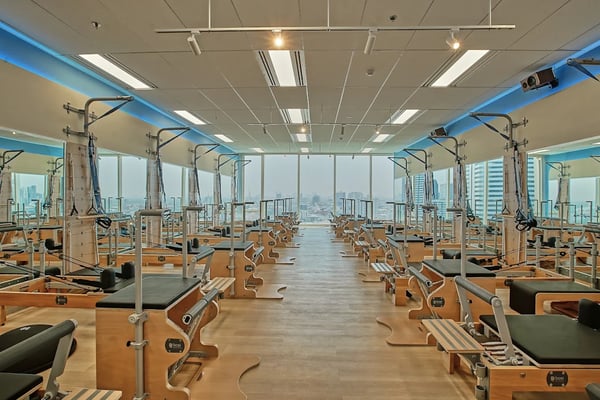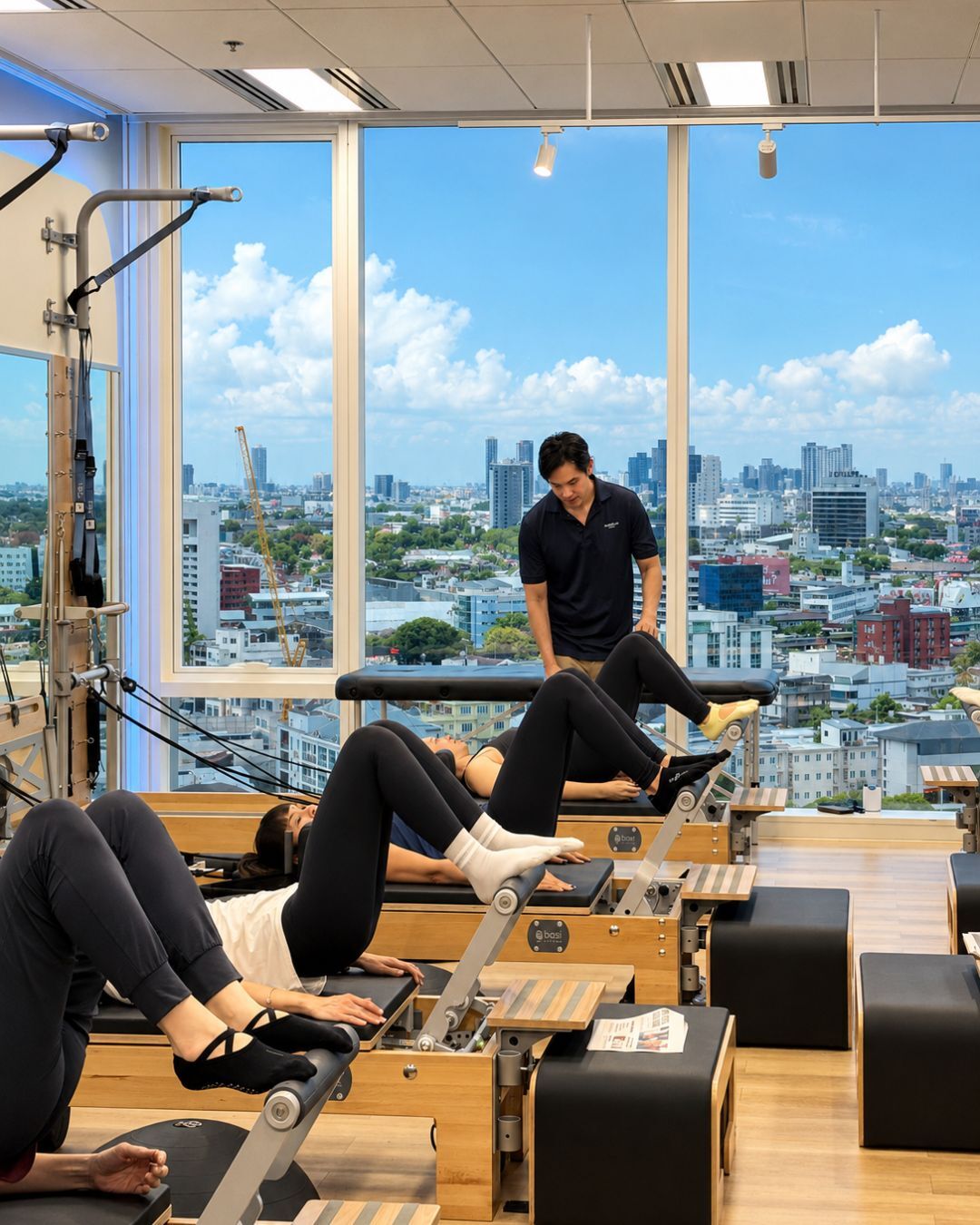
In our technology-heavy world, the term ‘office syndrome’ is rarely unheard of in everyday spaces. We hear people complaining about it in cafes, at dinners, in office breakrooms, and even at home. But what is office syndrome? And how can we use Pilates to fix Office Syndrome? Our article delves into the definition of office syndrome, its symptoms, what causes it, and ways to relieve and cure it with Pilates from the teachings of Dr. Jeremiah Jun Lee, Medical Director at Bodytune Physiotherapy.
What is Office Syndrome?
Office Syndrome is a term used to describe a group of symptoms involving chronic pain and muscle stiffness caused by prolonged sitting with poor posture. The pains commonly target the neck, shoulders, back, hips, and wrists. These symptoms include:
- Neck stiffness
- Tight shoulders
- Back pain
- Wrist discomfort
- Hip tightness
- Poor breathing
What Causes Office Syndrome?
Office Syndrome is caused by poor habits and long hours of desk-bound activity. It comes from weak core and glute muscles, a stiff mid-back, and poor breathing habits as a result of insufficient activation of bodily muscles. The prolonged sitting reduces a person’s gluteal activation and hip extension, leading to your lumbar spine and hamstrings having to compensate for it when you eventually do move. The problem is: those muscles aren't designed to carry that load. Over time, they get overworked and strained.
How to Treat Office Syndrome
There are various ways to combat Office Syndrome. Temporary fixes exist, such as massages, creams, and basic stretching. These techniques can relax tight muscles and reduce discomfort, but it’s a short-term relief. To truly cure Office Syndrome, people need to focus on movement and mobility. Mobility will help restore movement and improve muscle activation, as well as prevent pain from returning in the future. This is why using Pilates to fix Office Syndrome is key. By restoring proper joint control, you relieve your body of the pain and aches it’s been plagued with from sitting all day.
Using Pilates to Fix Office Syndrome
Pilates has been widely used to rehabilitate injuries, manage chronic pain, and even improve mental well-being. In fact, that’s how Joseph Pilates intended for it to be used when he first came up with it: to rehabilitate injured patients that were bed-ridden. Its use of low-impact, controlled movements, and focused breathing has been considered a therapeutic “medicine” for many years. It can effectively enhance a person’s flexibility, core strength, and neuromuscular coordination.
Pilates Exercises for Office Syndrome
Basic Back Extensions (Thoracic Extensions) This Swan is a back exercise that strengthens the back muscles while opening the chest. Practicing it will improve upper back mobility to counter slouching from sitting all day.
|
Movement: Lie face down with your hands under your forehead, keep your arms down, and inhale to lift the chest and head while lengthening forward. |
Bird-Dog The Bird-Dog is a floor exercise that strengthens your core, back, and glutes while improving your balance and protecting your lower back. It strengthens the core and stabilizes the lumbar spine. |
Movement: Put your hands and knees on the floor, with wrists under shoulders and knees under hips. Keep your spine neutral. Extend the opposite arm and leg simultaneously while keeping hips and shoulders level. |
Shoulder Bridge The Shoulder Bridge strengthens the glutes, hamstrings, and core while stabilizing the pelvis. It helps to strengthen the glutes that will support the lower back. |
Movement: Lie on your back with knees bent, feet hip-width apart. Exhale to curl the spine off the mat into a bridge, keeping ribs down. |
Cat-Cow The Cat-Cow is a floor exercise that mobilizes the spine, releases tension, and coordinates movement with breath. It is gentle and rhythmic, allowing for the individual to repeat the motion as many times as needed. |
Movement: Start on your hands and knees, with wrists under shoulders and knees under hips. Inhale to lift the chest and tailbone (Cow), then exhale to round the spine and release the head (Cat). |
Chest Opener The Chest Opener is an exercise designed to reverse hunched posture. Practicing it helps stretch the pectoral muscles that grow tight from prolonged typing. |
Movement: Stand upright and lift your sternum toward the ceiling. Interlace your fingers behind your back and straighten your elbows. Squeeze your shoulder blades together and lift your clasped hands slightly away from your body. |
Join Pilates Classes in Bangkok to Prevent Office Syndrome
When we understand what’s causing the problem in our body, the next step is to teach the body how to move better. By using Pilates to fix Office Syndrome, we can build habits that reward us with real improvement and long-term results.
At Club Pilates, we believe that Pilates is for every type of body – of any age and fitness level. Our talented Pilates instructors have completed more than 500 hours of comprehensive Pilates training and would be delighted to introduce you to the healing world of Pilates. To experience a Pilates class with us, visit our state-of-the-art Pilates studio in Bangkok at Worklabs (18th Floor) in the Grand Centre Point building here or call us at 02 286 1430 to book a session ahead of time. We’ve also shared the different ways you can get in touch with us below. We look forward to helping you ease your office-caused aches with an introductory class.
- LINE: https://lin.ee/g8rsIG0
- Tel: 061-894-6352 / 061-894-6152 / 02-286-1430
- Facebook: https://www.facebook.com/clubpilatesgrandecentrepointlumphini/
- Instagram: https://www.instagram.com/clubpilates_lumphini